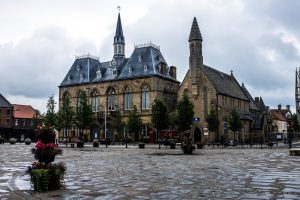
The church’s architecture tells a continuous story of English history. The sturdy west tower, with its thick sandstone walls and narrow windows, is Norman, dating from the 12th century. Later medieval builders extended the nave and added graceful arches and windows, blending strength with beauty. Inside, the Saxon tower arch—simple yet imposing—remains one of the most striking features, its weathered stones connecting today’s visitors to the earliest Christian worshippers in the Tyne Valley.
Light filters softly through stained-glass windows, illuminating carved woodwork and memorials that trace centuries of local life. The building feels both intimate and enduring, its quiet dignity reflecting the rhythms of a community that has gathered here through times of peace and upheaval alike. In the churchyard, ancient yews shelter gravestones worn by time, their inscriptions telling stories of farmers, soldiers, and families who shaped Corbridge’s history.
Despite its great age, St Andrew’s is no museum piece—it remains an active parish church, hosting regular services, concerts, and community events. Visitors are drawn by its serenity as much as by its heritage, finding in its cool stone and gentle light a sense of continuity that few places can match. St Andrew’s Church stands not just as a monument to faith, but as the steadfast heart of Corbridge itself, bridging centuries of devotion and daily life.


 Coastal
 History & Heritage
 City & Culture
 Food and drink
 Family Friendly
 Sport
Sport Museums
 Nature & Wildlife
 Countryside