
Rugby Parish Church
About:
St Andrew’s Church, often referred to as Rugby Parish Church, is one of the town’s most prominent and historic landmarks. Located close to the centre of Rugby, it has been a focal point of community and worship for centuries, with origins dating back to medieval times.
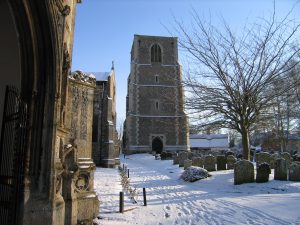
The church’s exterior is defined by its impressive west tower, which rises above the surrounding streets and acts as a visual anchor within the town. Built from warm-toned stone, the structure reflects a mixture of architectural periods, with elements of medieval design alongside later Victorian restoration. The churchyard surrounding the building adds to its character, with historic gravestones and mature trees creating a quiet, reflective setting just moments from the bustle of the town centre.
Inside, the church offers a spacious and atmospheric interior. High arches and stone columns draw the eye along the length of the nave, while stained glass windows bring colour and storytelling into the space. These windows depict a range of religious scenes and figures, as well as memorials connected to local families and the town’s history. The craftsmanship throughout the building, from carved woodwork to detailed stone features, reflects centuries of care and adaptation.
St Andrew’s has long played an important role in Rugby’s civic and cultural life. It has hosted generations of baptisms, weddings, and community events, and continues to function as an active place of worship. Its position near key landmarks, including Rugby School, strengthens its connection to the town’s wider history and identity.
Despite its size and significance, the church maintains a welcoming and peaceful atmosphere. Visitors are free to explore, sit quietly, or take in the details of the building at their own pace. It offers a moment of calm within a town otherwise known for its sporting heritage and everyday activity.
Overall, Rugby Parish Church combines history, architecture, and community importance. Its enduring presence and carefully preserved features make it not only a place of worship but also a meaningful link to Rugby’s past and a valued part of its present.
 Countryside