

Colnbrook
About:
Colnbrook is a small but characterful village that feels quietly resilient, shaped by centuries of change and its proximity to major transport routes. Sitting just outside Slough and pressed up against the western edge of Heathrow Airport, Colnbrook offers a striking contrast between historic settlement and modern infrastructure.
The heart of Colnbrook is its compact high street, which still follows a medieval street pattern. Lined with traditional buildings, long-established pubs and small local businesses, it feels distinctly village-like despite the roar of aircraft overhead. Walking through the centre reveals narrow plots, irregular rooflines and older brickwork that hint at the village’s age. This is not a polished heritage destination, but a place that has evolved through use rather than preservation.
Colnbrook’s history is closely tied to travel and trade. It developed as a staging post on the main route between London and the west of England, with coaching inns providing food, rest and fresh horses. Several historic pubs in the village trace their origins to this period, when Colnbrook would have been busy with carts, coaches and river traffic. The nearby River Colne also played a role, shaping the local landscape and supporting early industry and agriculture.
One of the village’s most notable historic buildings is St Thomas’ Church, Colnbrook, which dates back to the medieval period. The churchyard provides a quiet, reflective space that feels removed from the surrounding roads and airport infrastructure, reinforcing the sense of Colnbrook as an older settlement surviving within a modern setting.
Today, Colnbrook is best explored on foot. Short walks along the River Colne reveal green corridors and unexpected calm, while wandering the village streets highlights how residential life continues alongside heavy transport networks. The contrast between low cottages, historic pubs and the nearby airport perimeter fence is one of the village’s defining features.
Colnbrook’s appeal lies in this tension. It is a place shaped by movement, yet rooted in continuity. Visiting offers insight into how historic communities adapt rather than disappear, maintaining identity even as the world around them transforms dramatically.

 Coastal

 History & Heritage

 Countryside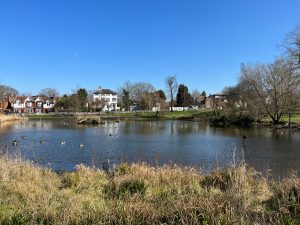

 City & Culture