
Brackley
About:
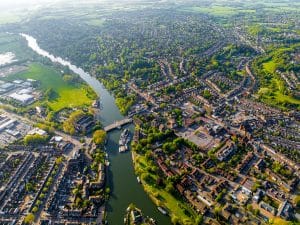
Brackley is a small market town with a calm, well-kept character, sitting close to the Oxfordshire border. Its wide High Street is the heart of the town, lined with a mix of Georgian and later buildings, many in warm stone that catches the light on brighter days. There’s a sense of space here that you don’t always find in towns of a similar size, with the broad street hinting at its past importance as a coaching stop.
That history runs deep. Brackley developed as a market town in the medieval period, gaining a charter in the early 13th century. Its location on the main route between London and the Midlands made it a key stopping point for travellers, particularly during the coaching era. Inns and stables would have lined the High Street, serving passengers and horses moving between major cities. The unusually wide street is a lasting reminder of those busy, horse-drawn days.
One of the town’s most distinctive historical features is its former role in lace-making. In the 18th and 19th centuries, Brackley became known for its lace industry, with many local women producing intricate handmade lace from their homes. This cottage industry formed an important part of the local economy before industrialisation gradually reduced its prominence.
Today, Brackley balances that history with a steady, modern rhythm. The High Street remains active with independent shops, cafés and everyday essentials, giving it a practical, lived-in feel rather than a purely tourist-focused one. Buildings like Brackley Town Hall and St Peter’s Church anchor the town visually and historically, adding a sense of continuity.
Despite its growth, Brackley still feels closely tied to the surrounding countryside. Just beyond the centre, fields and hedgerows return quickly, reinforcing its rural setting. Its proximity to Silverstone Circuit also adds an unexpected modern connection, linking this quiet town to one of the most famous racing venues in the world.
It’s a place shaped by movement and craft, where traces of its past remain clearly visible in the layout of its streets and the character of its buildings.
 Lakes and Lochs
 Coastal
 Museums
 Nature & Wildlife
 Countryside
 History & Heritage
 Major Landmarks
 City & Culture
 Nightlife
 Food and drink
 Family Friendly

 Heritage Railways
 Sport
Sport