

Unbelievable, unforgettable Ullapool by supreme Scottish Citylink
Reaching Ullapool with Scottish Citylink on the 961 bus is part of the experience itself – a 1 hour 20 minute thrill a minute delight that you will never forget!
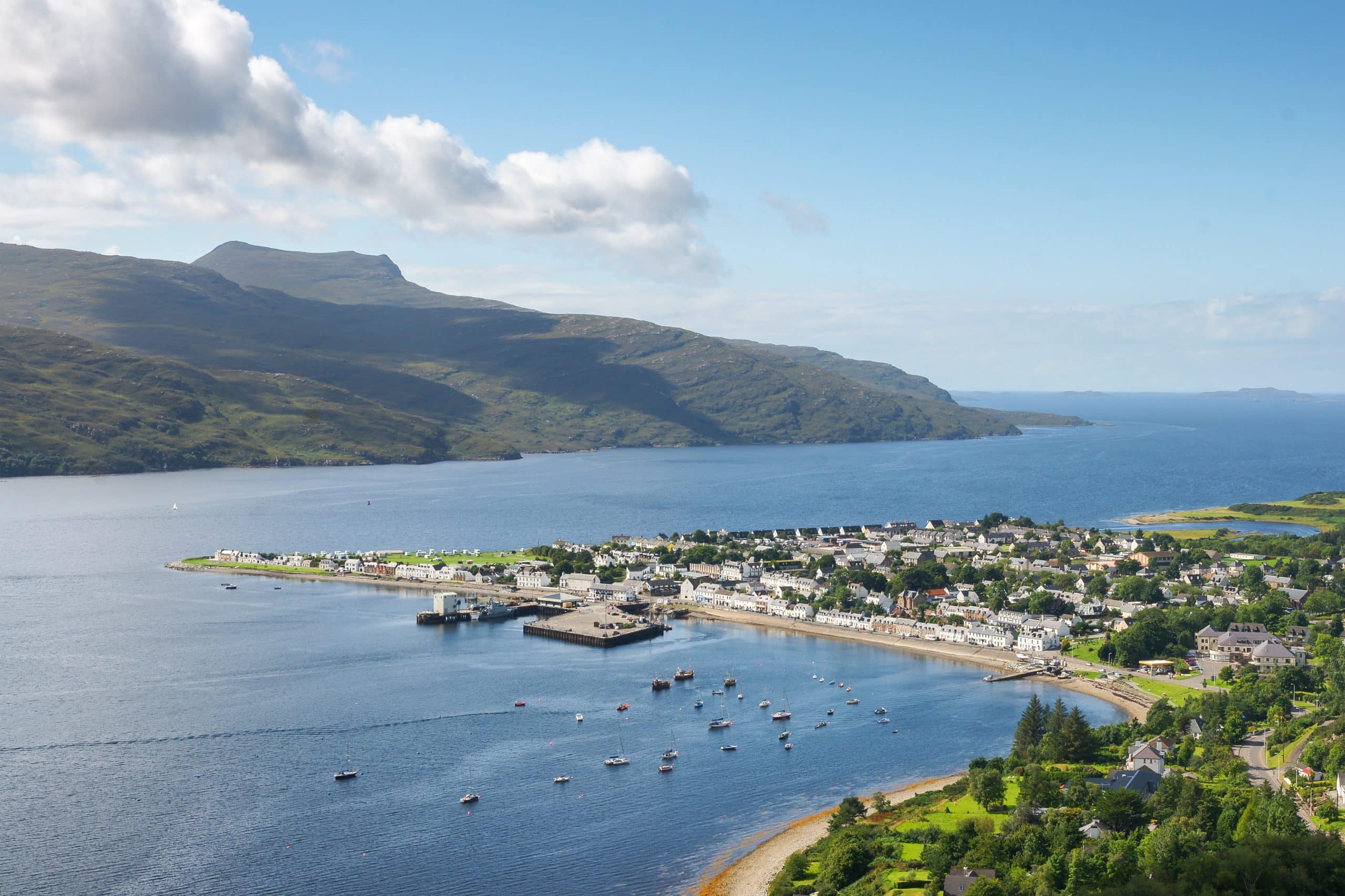
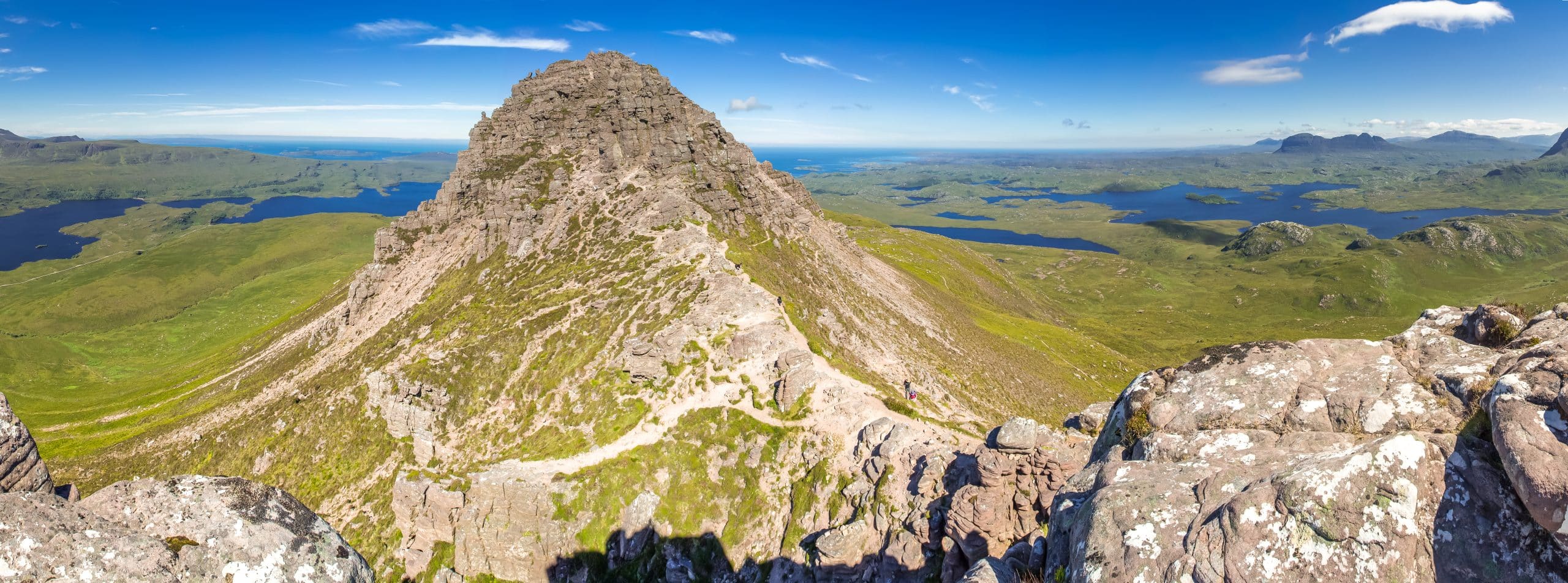
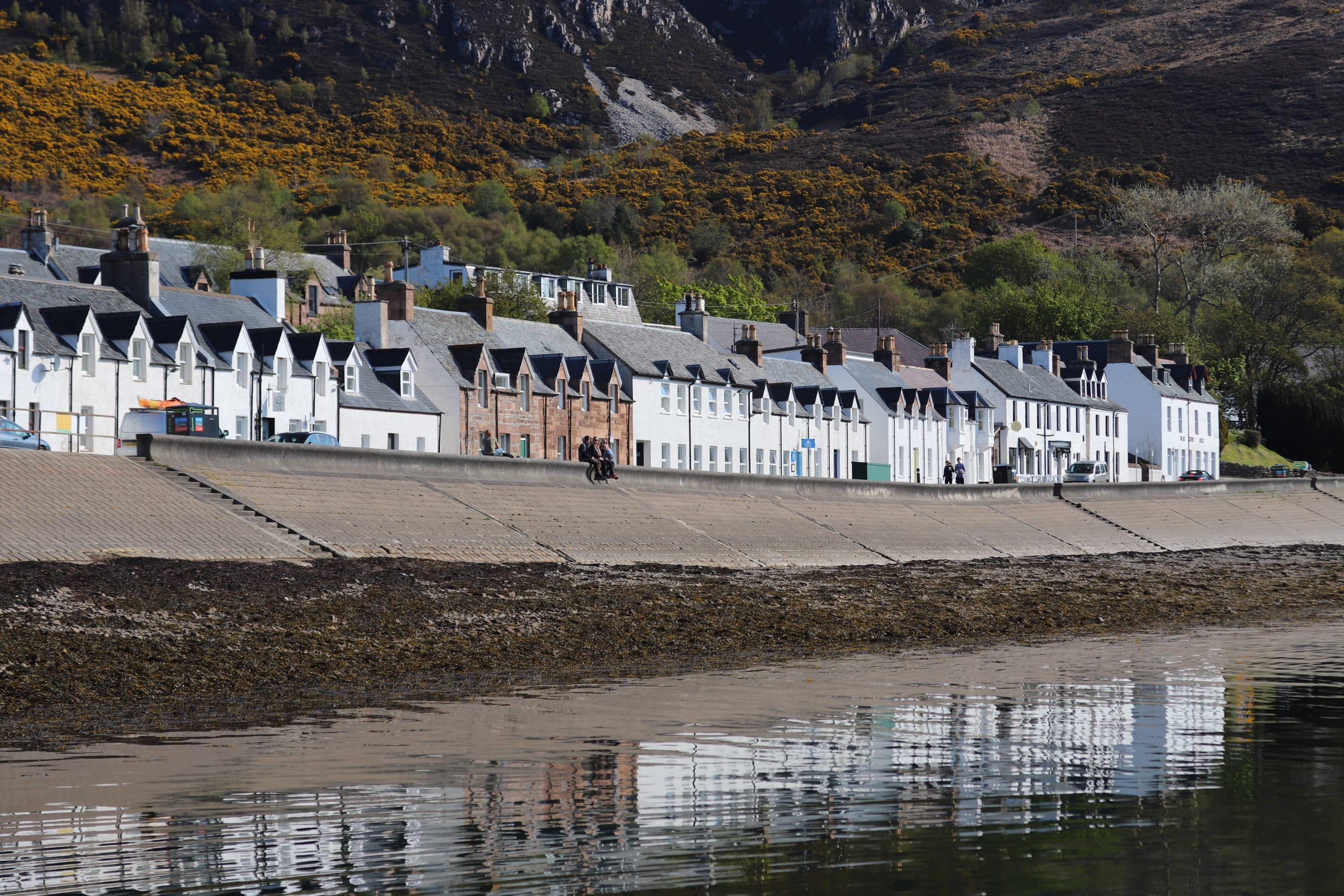
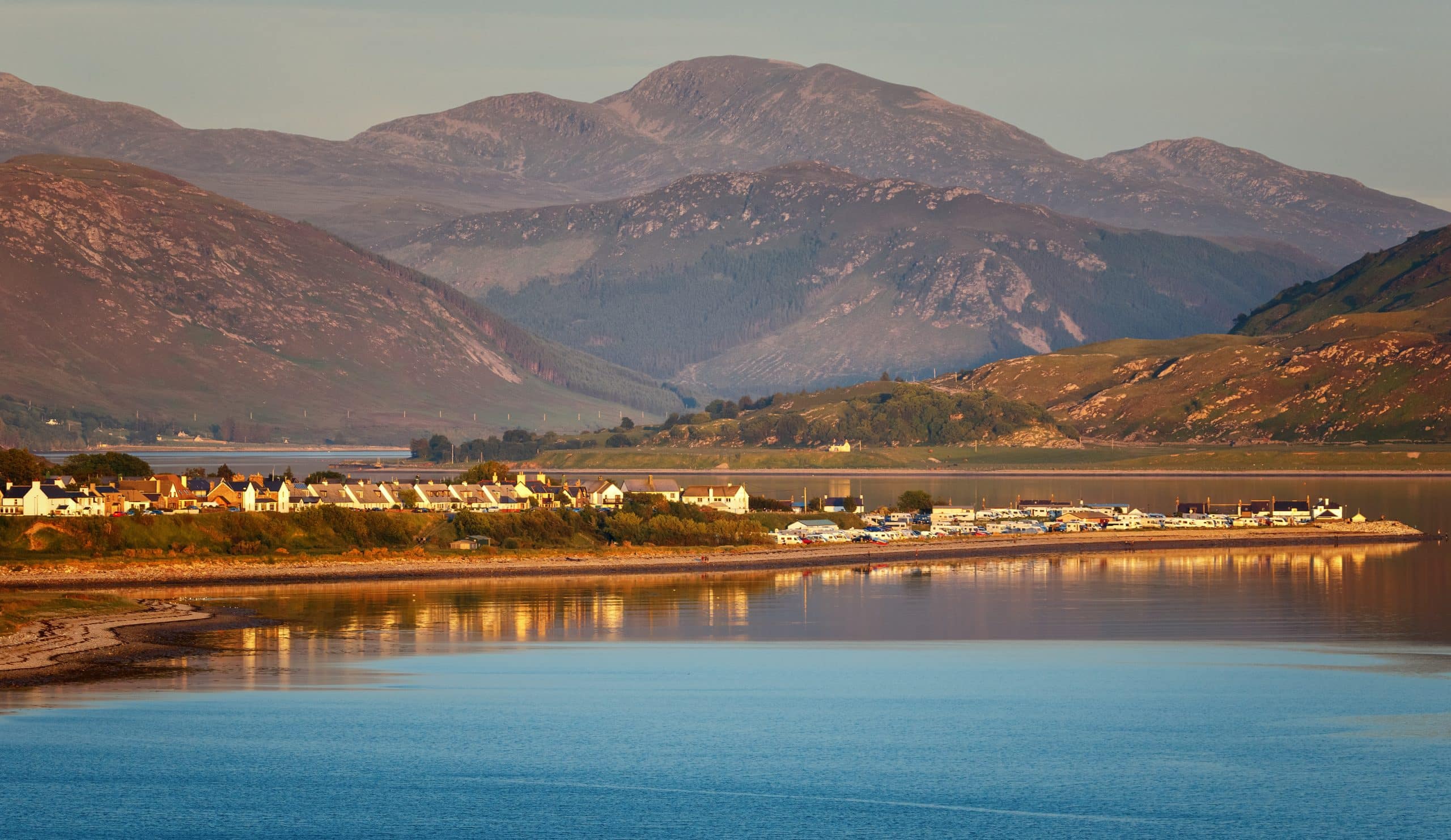
From Inverness, the bus winds northwest through a landscape that gradually sheds the familiar and becomes something more elemental. The road narrows, the trees thin, and the land opens into vast stretches of peat moor and loch-studded wilderness. Mountains begin to rise in sculptural forms rather than gentle slopes, with names like Stac Pollaidh and Suilven appearing almost surreal against the sky. The journey feels like a slow unveiling, and by the time the bus descends towards Loch Broom, Ullapool appears almost unexpectedly, a neat cluster of whitewashed buildings gathered along the shore, framed by water and mountains.
Ullapool itself is small, but it has a distinct presence that far outweighs its size. Built in 1788 as a planned fishing village by the British Fisheries Society, its grid layout still gives it a sense of order unusual for a Highland settlement. The white cottages along the waterfront, originally constructed for herring fishermen, remain one of its defining features. Despite its origins, Ullapool never became the major fishing hub it was intended to be, and that slight sense of “what might have been” lingers quietly in its character.
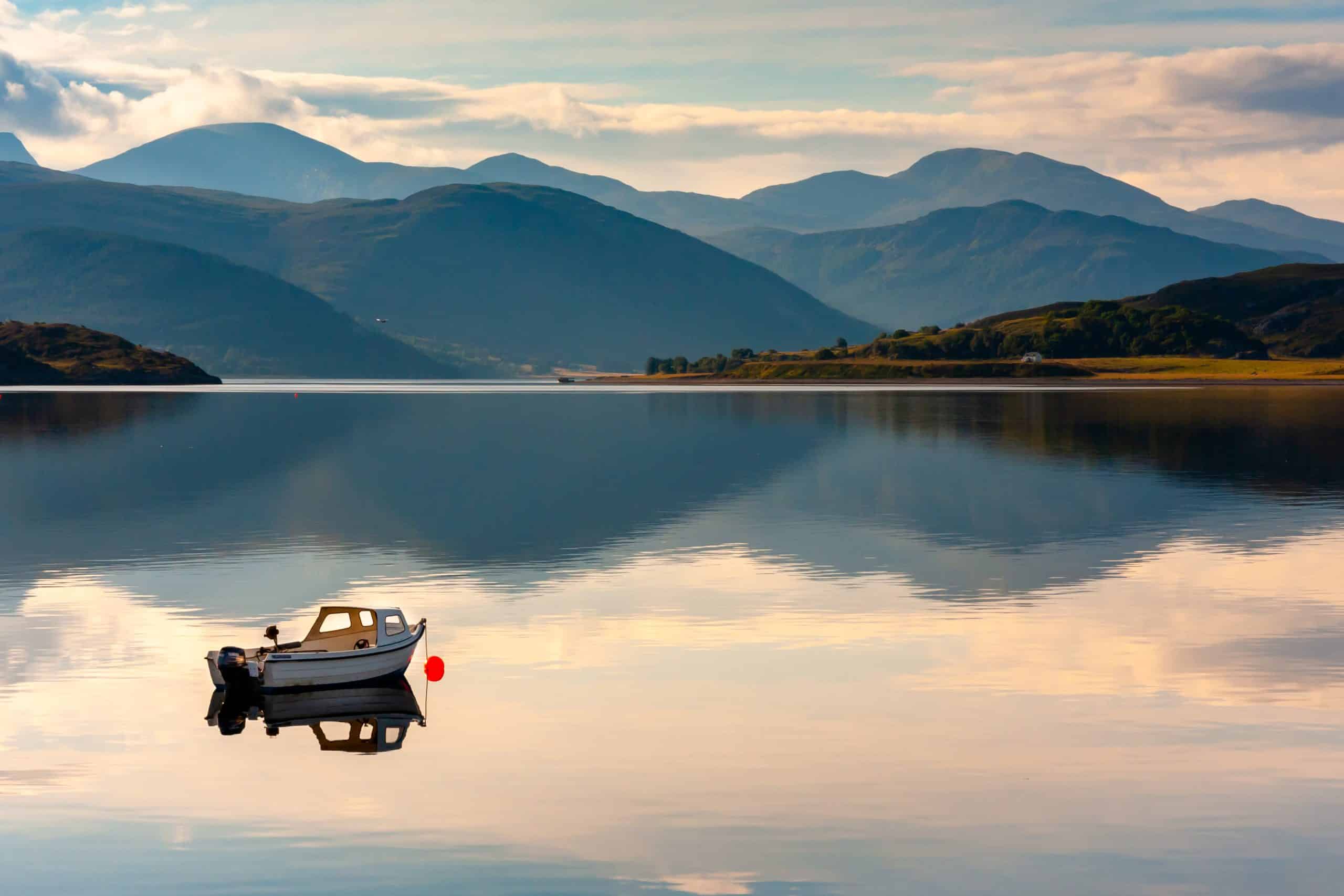
The first thing that strikes most visitors is the setting. Loch Broom stretches out from the village, calm and reflective on still days, or textured with wind and rain when the weather turns. Across the water, the mountains rise abruptly, their slopes often streaked with mist or shifting light. This interplay between land, water, and sky gives Ullapool a constantly changing atmosphere. Even within a single afternoon, the view can transform several times, from bright clarity to something almost monochrome and dramatic.
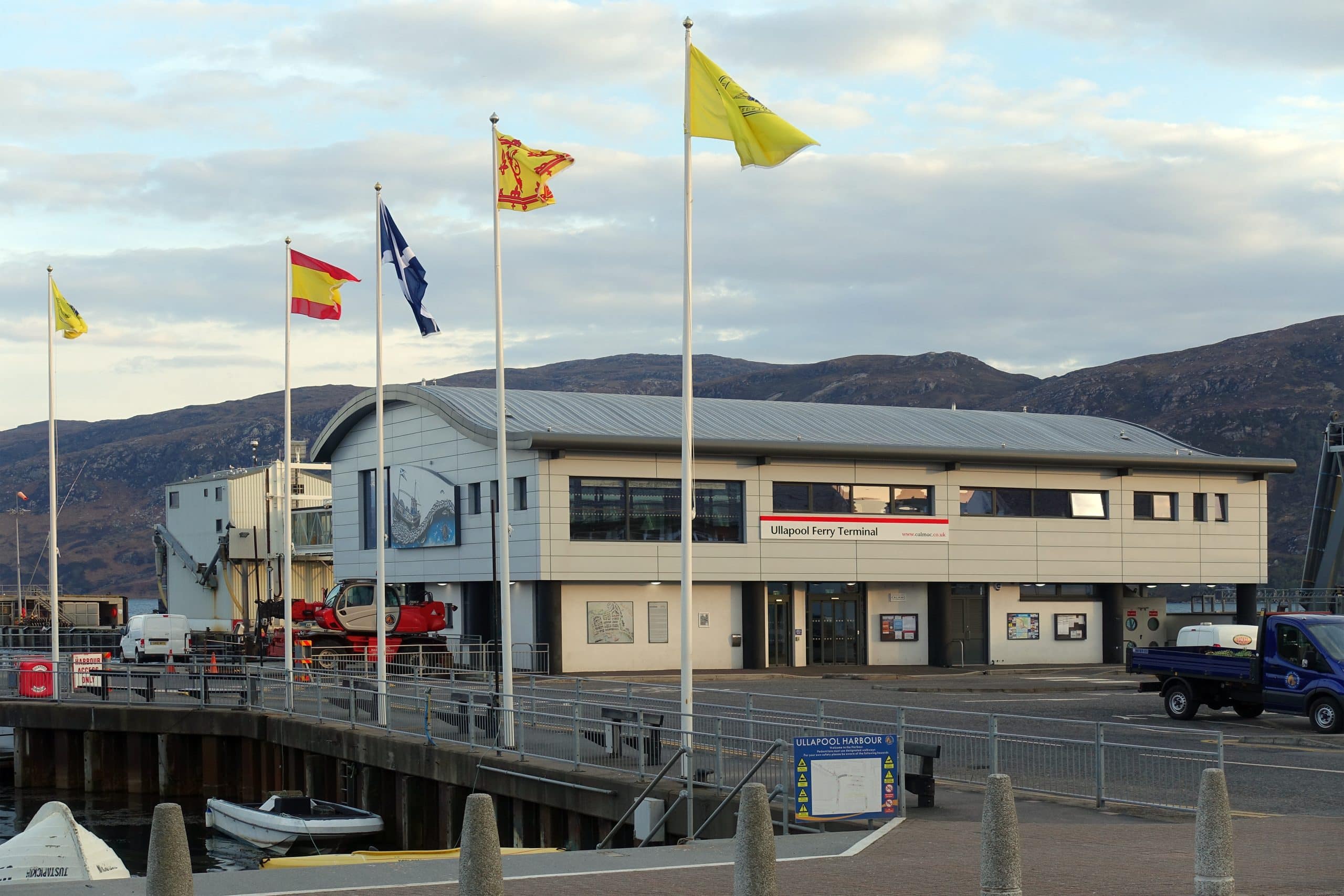
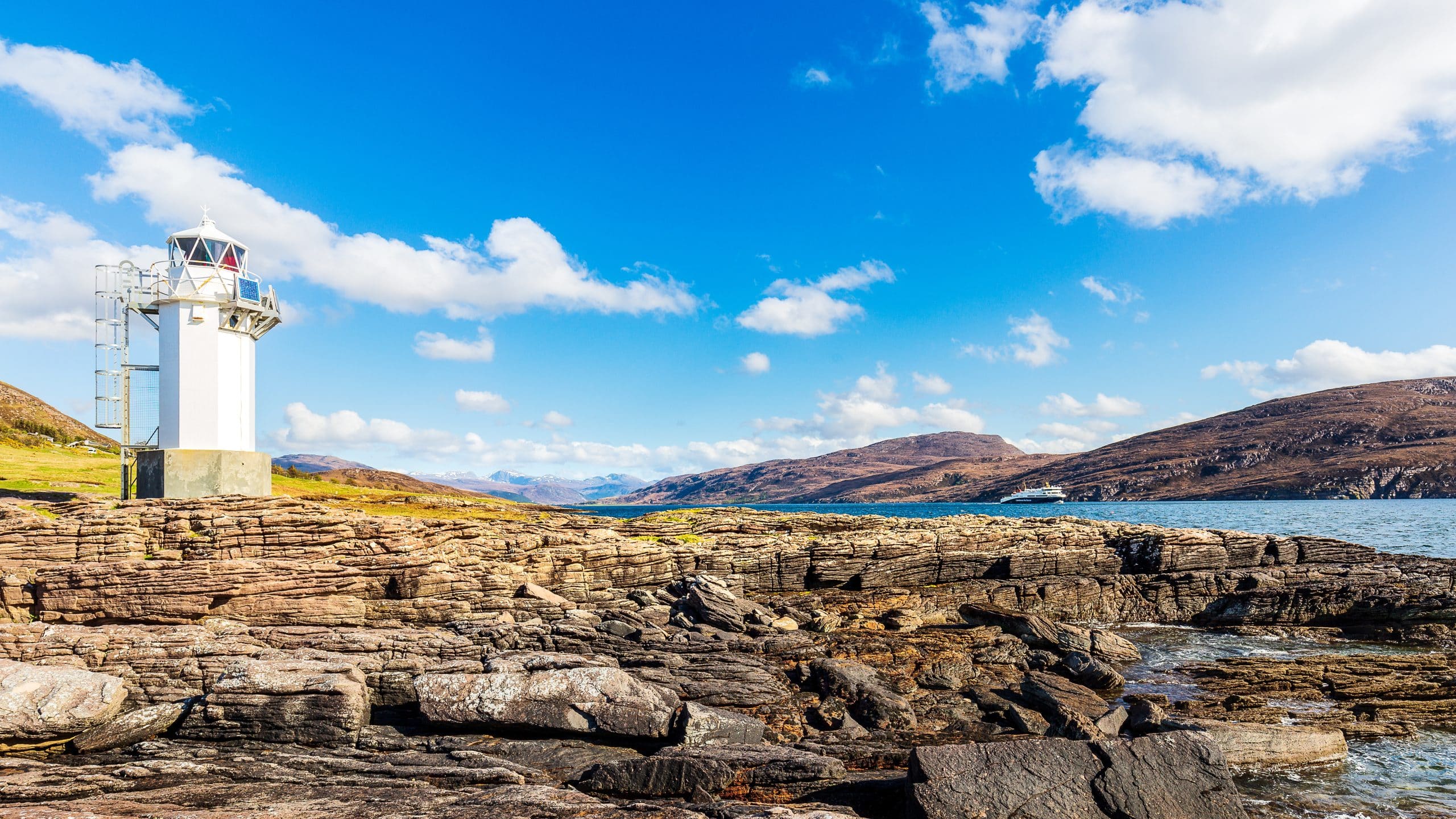
There is a strong sense of Ullapool being both a destination and a gateway. It serves as a key ferry port for the Outer Hebrides, particularly for routes to Stornoway, which brings a steady rhythm of arrivals and departures. This movement lends the town a quiet energy. People pass through, but many linger longer than intended. There is something about Ullapool that encourages pause.
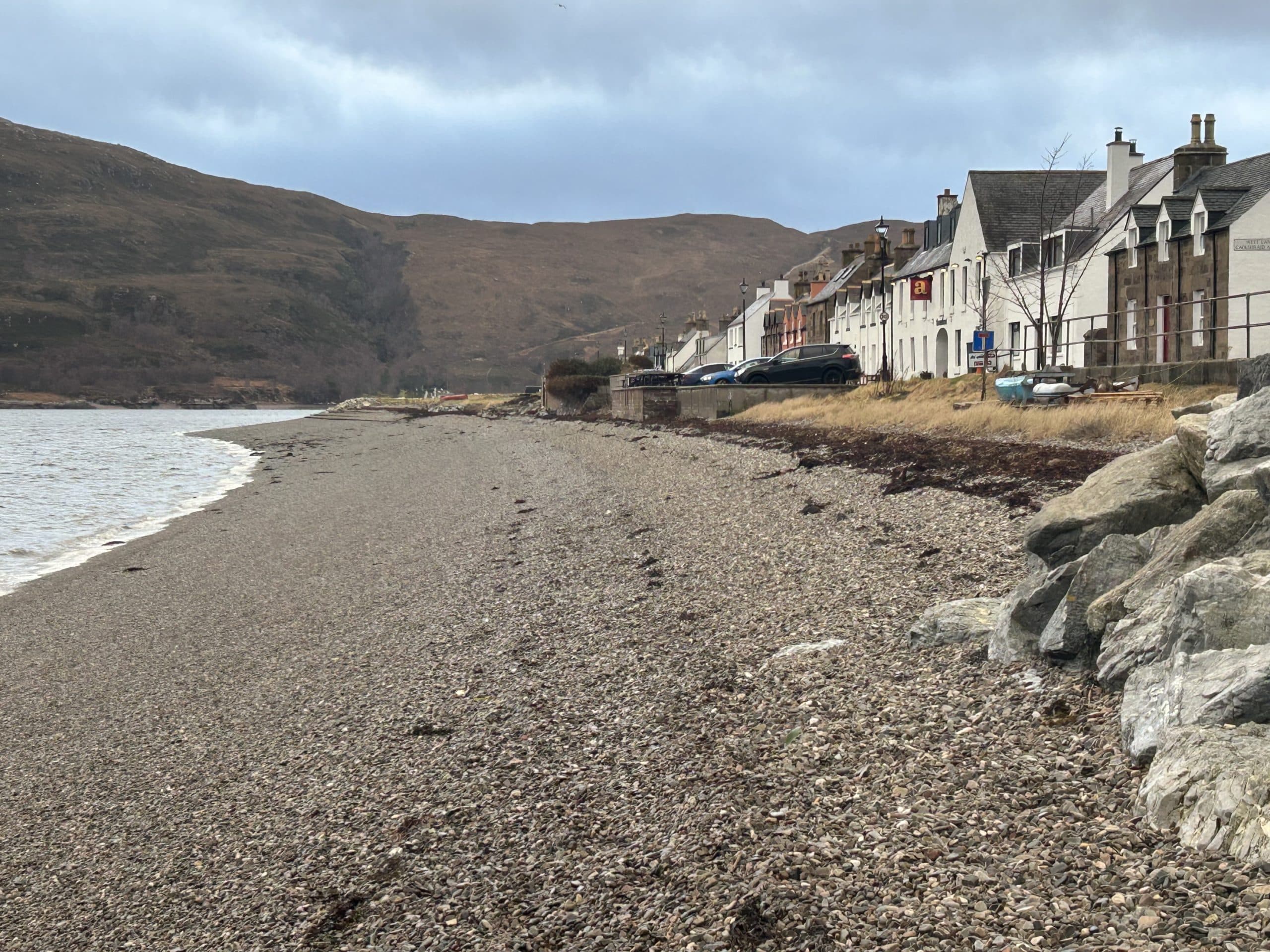
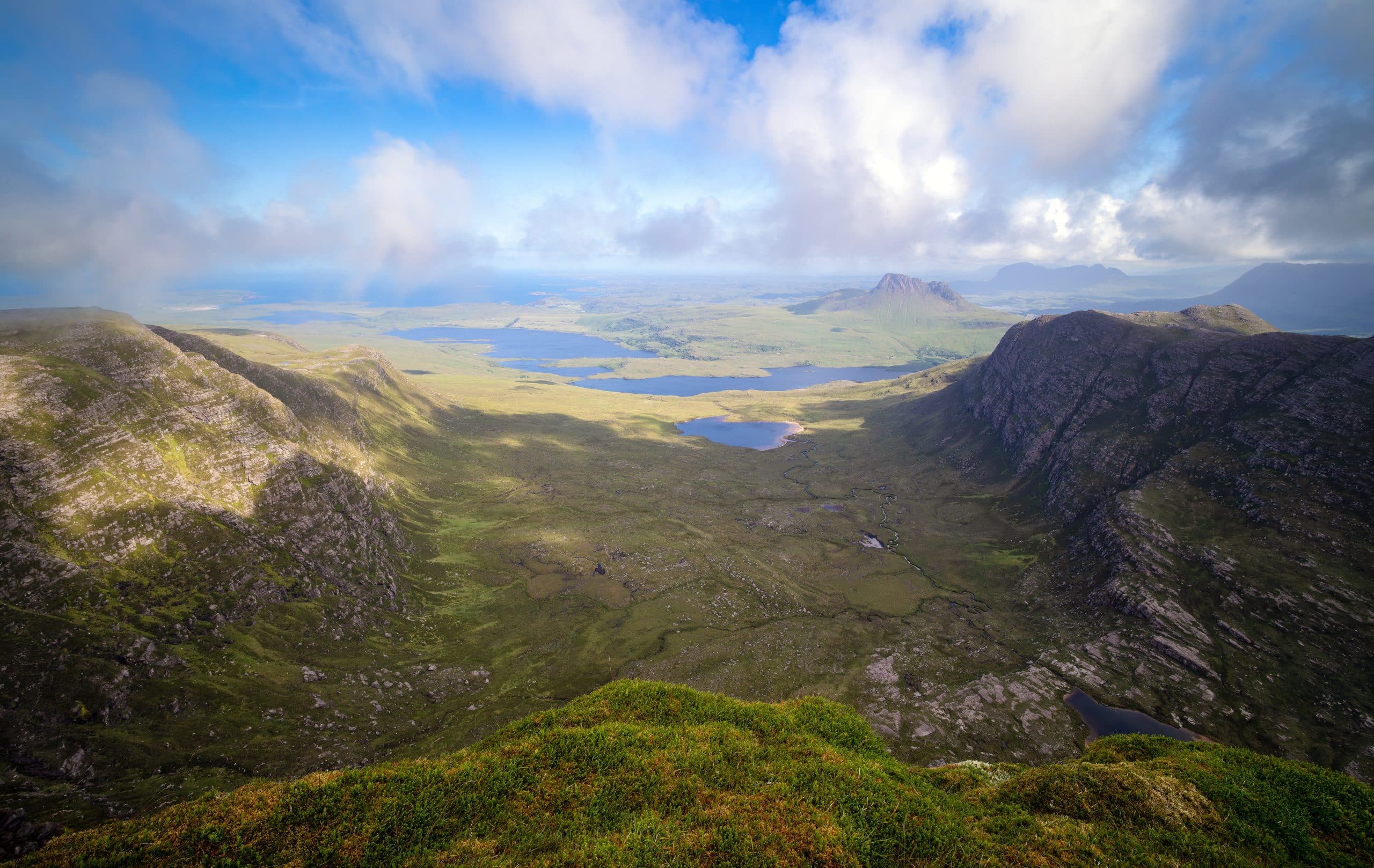
In terms of things to do, much of Ullapool’s appeal lies in its simplicity and proximity to nature. Walking along the harbour is an essential experience, especially in the early morning or late evening when the light is softer and the town feels almost suspended in stillness. Boat trips from the harbour offer the chance to explore Loch Broom more closely, often with sightings of seals, seabirds, and occasionally dolphins. For those willing to venture a little further, the surrounding landscape provides some of the most striking hiking opportunities in Scotland. Hills like Stac Pollaidh and Ben More Coigach are within reach and offer views that feel vast and cinematic, with countless lochs scattered below and the coastline stretching endlessly westward.
Closer to the village, Ullapool Museum provides a compact but thoughtful insight into the area’s history. Housed in a former Telford church, it tells the story of the fishing industry, the Highland Clearances, and the lives of those who shaped the town. It is the kind of place where small details stand out, giving a more human perspective on what might otherwise feel like distant history.
Ullapool has also developed a reputation for its cultural life, particularly considering its size. The village hosts the Loopallu music festival, founded by Robert Hicks, which has attracted notable artists over the years. There is also a strong local arts scene, with galleries and bookshops that feel carefully curated rather than commercial. The presence of the Ullapool Book Festival further reinforces this, drawing writers and readers to a place that feels unexpectedly literary.
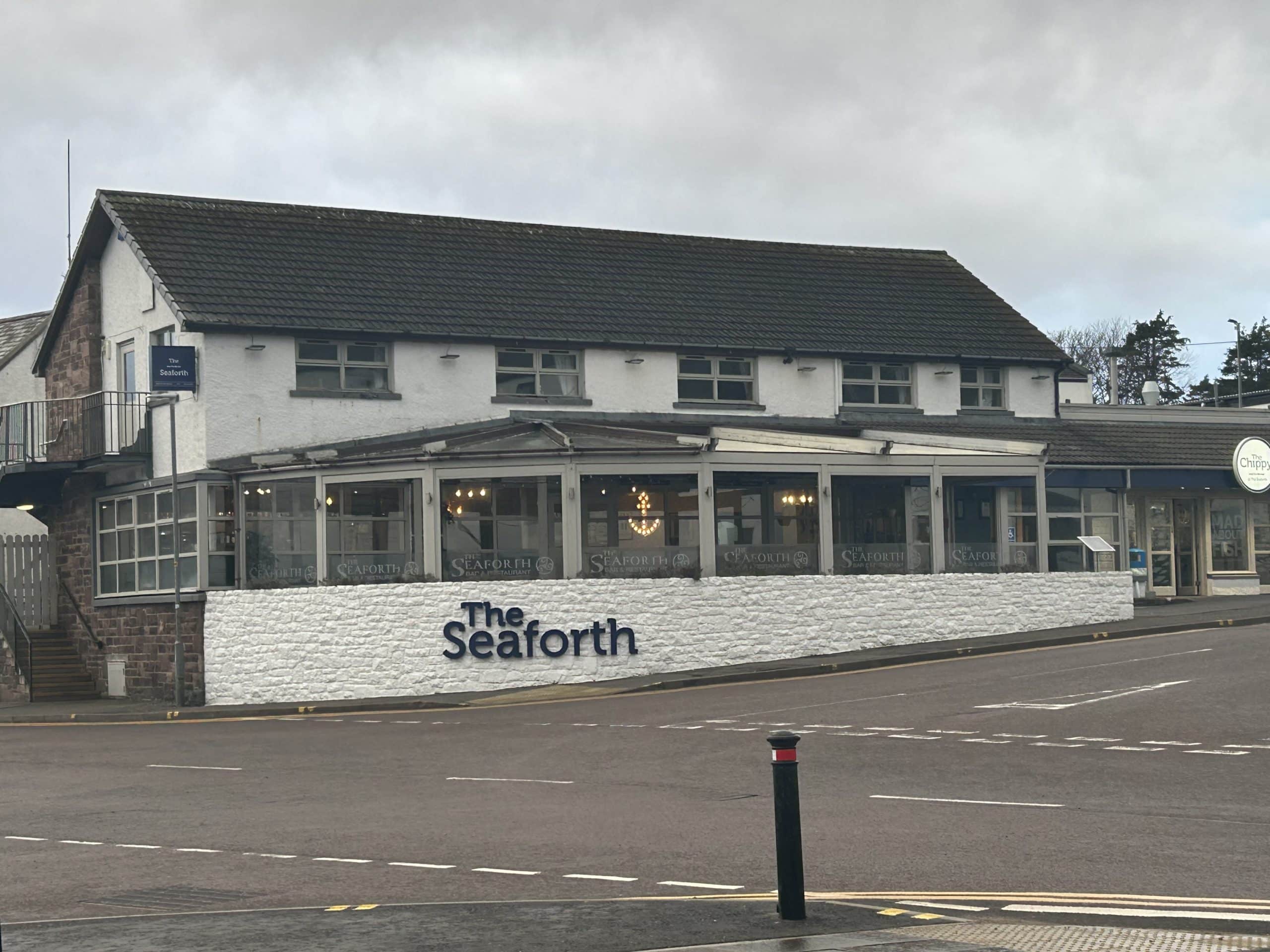
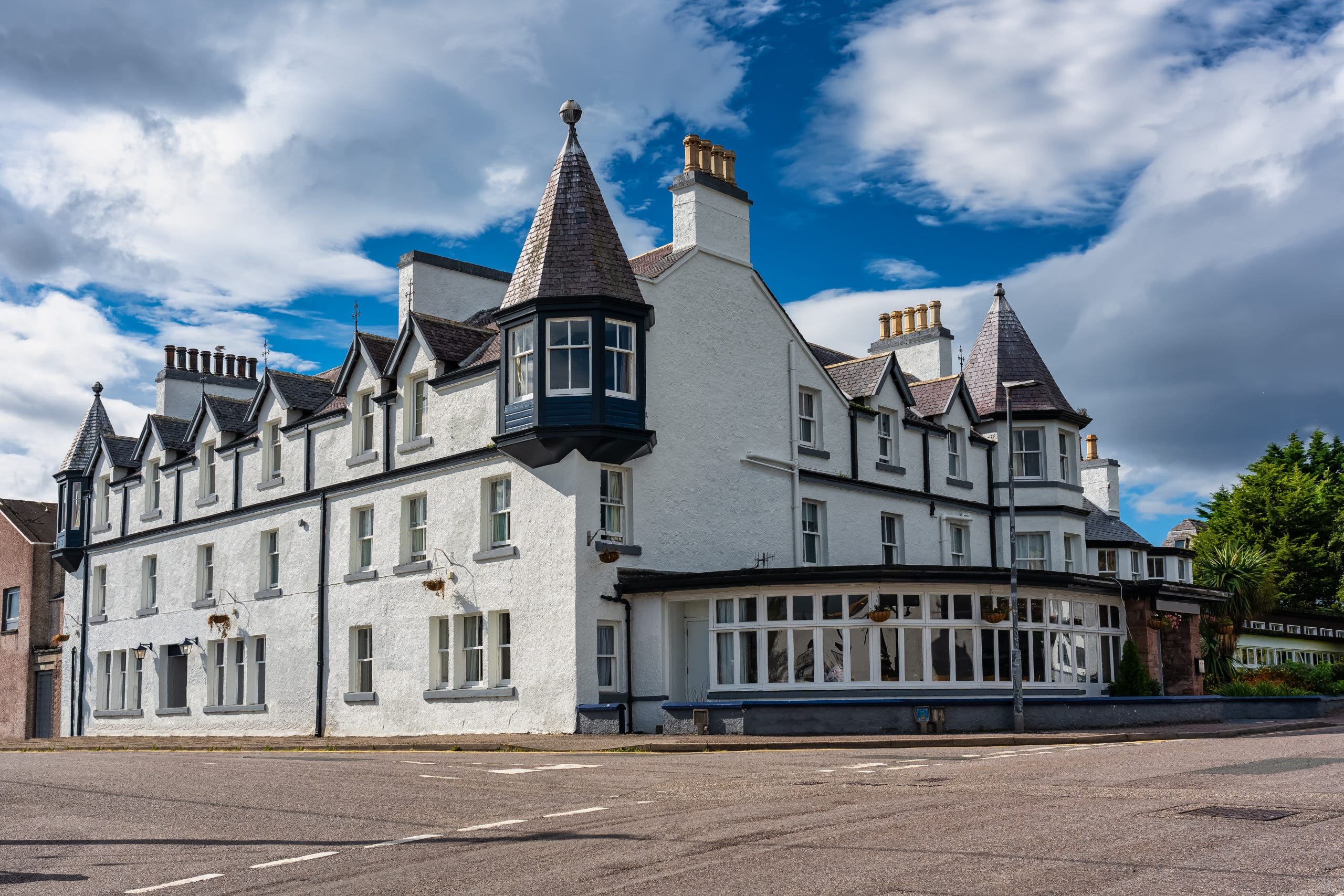
Food in Ullapool is another highlight, and it leans heavily into the quality of local produce. Seafood is, unsurprisingly, central. The Seafood Shack, a small but widely celebrated spot near the harbour, serves dishes that are simple but exceptionally fresh, often changing depending on the day’s catch. The Ceilidh Place offers a slightly broader menu and doubles as a cultural hub, with live music and a bookshop attached. For something more casual, the Arch Inn provides hearty meals with views over the loch, while also being a good place to experience the social side of the town in the evenings, so too The Seaforth with its wonderful views over the harbour.
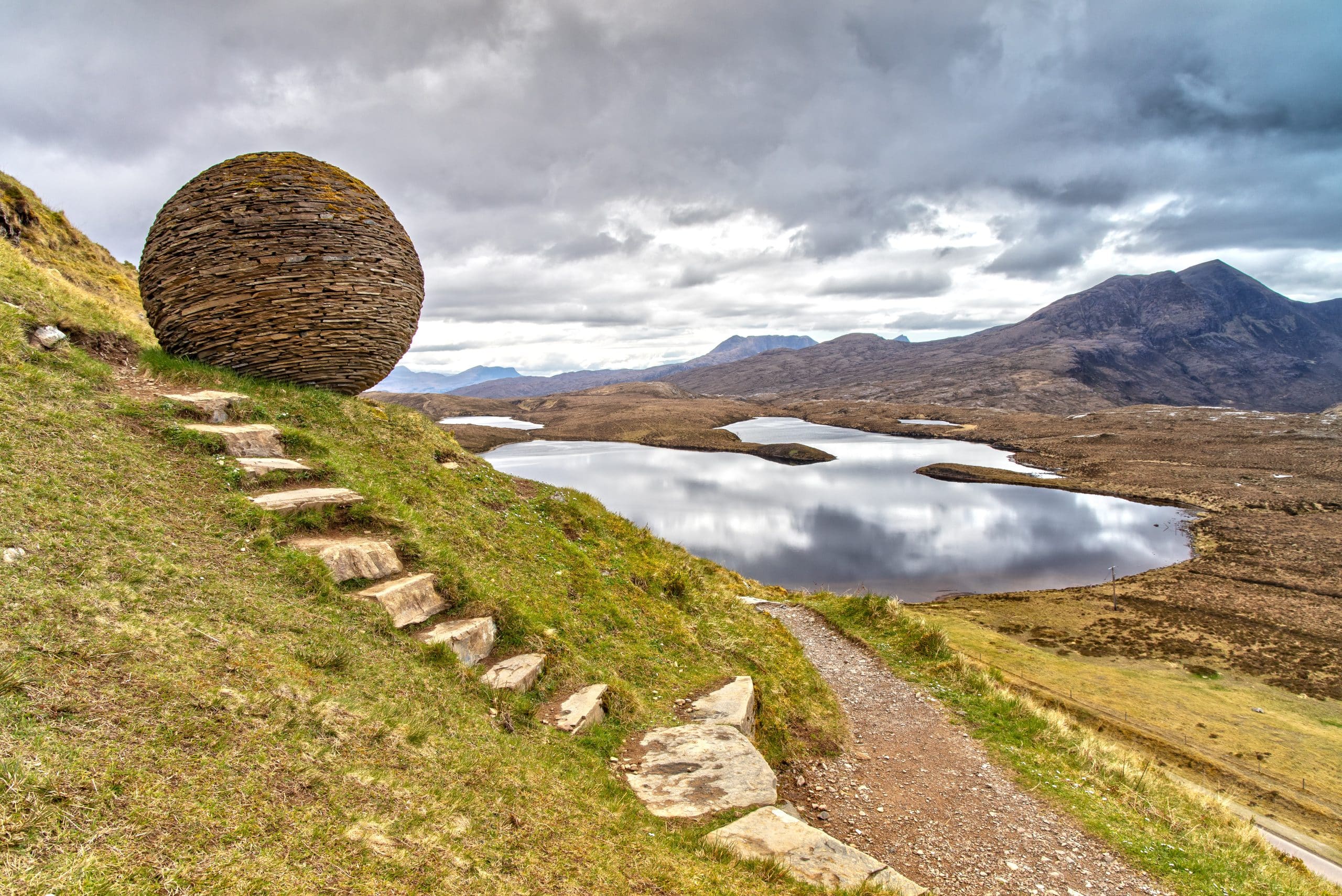
Despite its relatively modern origins, Ullapool is surrounded by landscapes steeped in much older stories. The wider region of Wester Ross has evidence of human settlement stretching back thousands of years, and traces of ancient life can be found in the form of brochs, cairns, and scattered archaeological remains. One obscure but fascinating fact is that just outside Ullapool, at Knockan Crag, you can stand on rocks that were once part of a geological discovery that reshaped understanding of how mountains are formed. The Moine Thrust, identified here in the 19th century, showed that older rocks had been pushed over younger ones, a revelation that challenged existing geological theories at the time. The large stone sphere in the photo represents the Earth itself. It’s not just decorative. It ties directly into the geology of the site. The idea is to make you think about the immense scale of the planet, the forces moving beneath your feet and how something as huge as Earth can still be reshaped over time
Another lesser-known detail is that Ullapool was once briefly considered as a site for a major naval base during the Second World War. While it was ultimately not developed to that extent, the loch did serve as an anchorage for naval vessels, adding another layer to its history that is not immediately visible.
The people associated with Ullapool are often those who have been drawn to it rather than those born there. The writer James Rebanks has spoken about the wider Highland landscape in ways that resonate with places like Ullapool, even if not directly tied to the town. More locally, artists and musicians have quietly made Ullapool a base, contributing to its creative identity without turning it into something overtly branded or curated.
What ultimately defines Ullapool is its balance. It is neither overly remote nor overly developed. It offers enough to do without overwhelming, and enough stillness to feel like an escape. The scenery is undeniably dramatic, but the town itself remains grounded and understated. There is no sense of performance or trying to impress. Instead, Ullapool simply exists within its landscape, shaped by it but not dominated by it. To plan your unforgettable trip on super Scottish Citylink to unbelievable Ullapool, check out….
https://www.citylink.co.uk/our-routes-and-timetables/inverness-ullapool/
Related posts
 30 Jan
Our favourite lochs and lakes – Loch Leven by Stagecoach
Jumping out in our photo album! We’ve literally thousands of images here in our library at Great Scenic Journeys HQ…
 2 Feb
2 Feb
First fully-electric city bus network launched by Stagecoach
Fabulous news as Stagecoach this morning launched the UKs first fully-electric city bus network in Inverness! This constitutes an awesome…
 3 Apr
3 Apr
Get Set for top gear and Chipping Norton on the Pulhams 801
It’s been chipping away at us for some time to put pen to paper about Chipping Norton (boom, boom!), but…