
Newark
About:
Newark is a historic market town in Nottinghamshire, set along the banks of the River Trent. Its strategic position at the crossing of major routes—most notably the Great North Road—made it an important commercial and military hub for centuries.
The town’s origins stretch back to Anglo-Saxon times, but it rose to prominence after the construction of Newark Castle in the 12th century by Bishop Alexander of Lincoln. Though now partly ruined, the castle remains a defining landmark, overlooking the river and public gardens. Newark’s medieval layout is still evident today, particularly in its large market square, one of the finest in England, which continues to host regular markets.
Newark played a significant role during the English Civil War, serving as a Royalist stronghold. The town endured multiple sieges due to its strategic importance, and traces of these turbulent years still shape its historical identity. Another notable historical moment came earlier, in 1216, when King John died nearby at Newark Castle.
Architecturally, Newark boasts a rich blend of styles. The striking St Mary Magdalene Church is one of the largest parish churches in England, featuring an impressive spire that dominates the skyline. Timber-framed buildings, Georgian townhouses, and Victorian additions give the town a layered and characterful appearance.
Modern Newark balances heritage with accessibility. It is well connected by rail, with fast services to London, and remains a lively centre for shopping, dining, and cultural events. The town hosts festivals, antiques fairs, and traditional markets that reflect its long-standing role as a place of trade and community gathering.
Surrounded by countryside, Newark also serves as a gateway to rural Nottinghamshire, offering scenic walks along the Trent and easy access to nearby historic estates. Its combination of deep history, architectural charm, and active local life makes Newark a distinctive and enduring English market town.
 Countryside
 History & Heritage
 Food and drink
 Museums
 Nature & Wildlife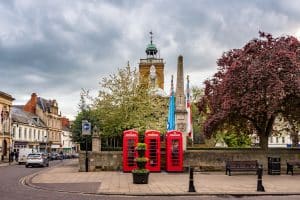

 City & Culture
 Sport
Sport Major Landmarks
 Thrill and spills high above captivating Chester!