

No weariness on Weardale 773 for our intrepid Scenic Explorer!
There’s some real hidden gem journeys out there within the Great Scenic Journeys collection and one of our favourites is the super 773 from Consett to Blanchland, ever so deep in the heart of County Durham. We sent our North East scenic thrill-seeker, Alex Nelson out on an expedition last week. Alex lifts the lid on a fab trip out…
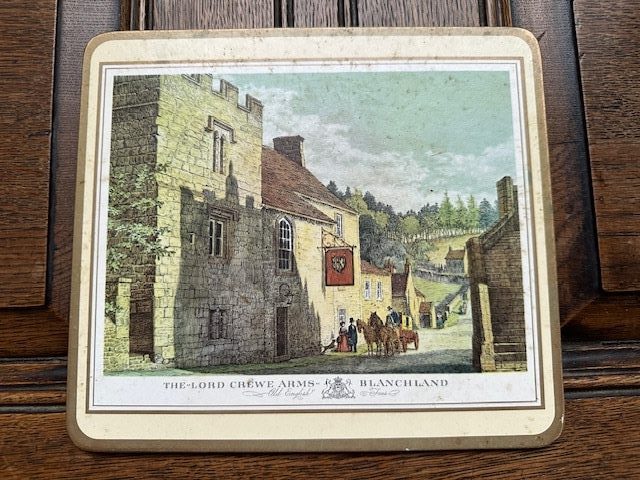
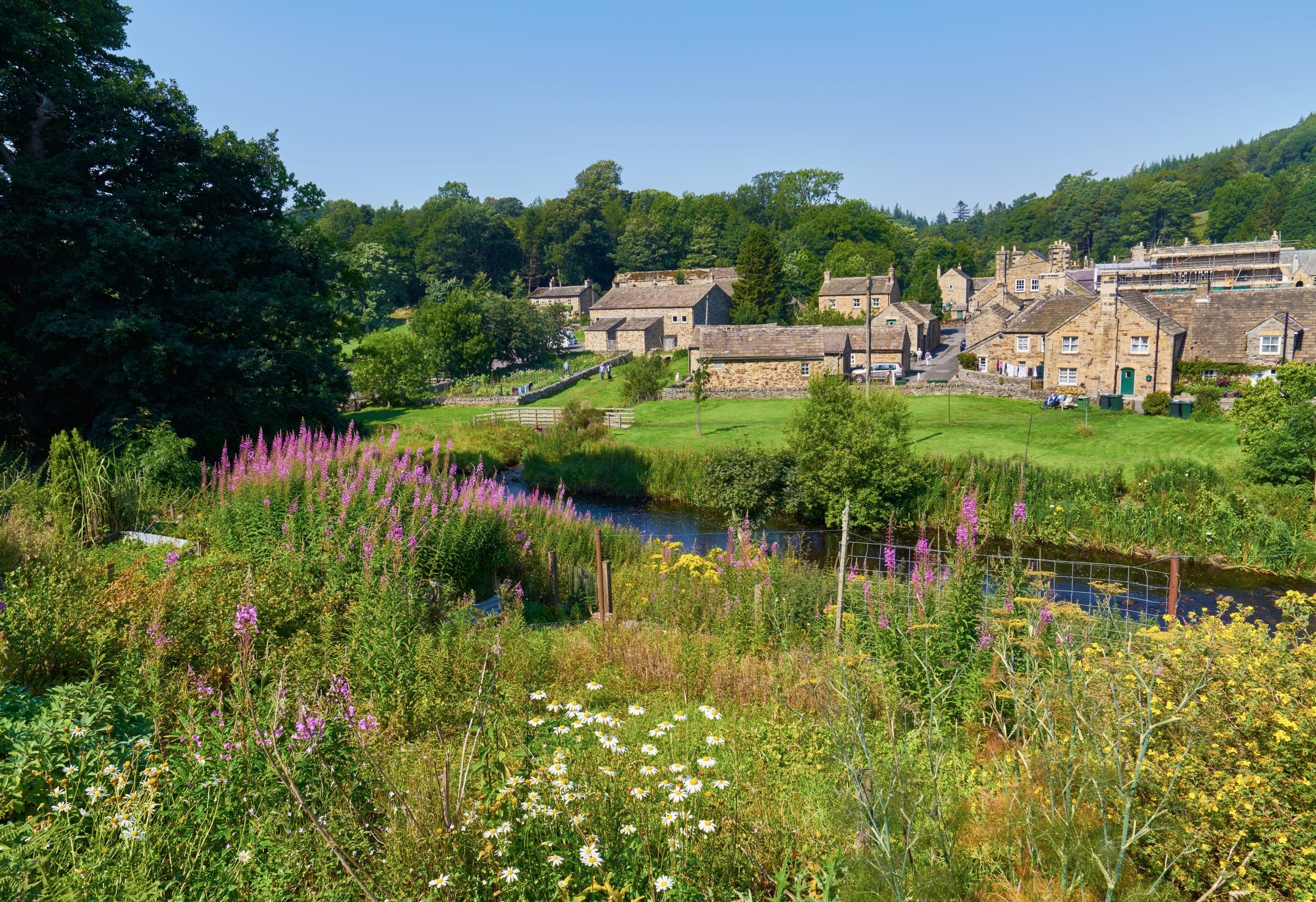
When I was growing up, we had a series of placemats in the kitchen depicting Old Inns of England. One of these featured the Lord Crewe Arms at Blanchland, so I was familiar with the inn before I had set foot in the village, which has about 130 inhabitants. Whilst Storm Goretti was brewing in the Atlantic, the weather forecast for County Durham was quite benign, so in need of fresh air I planned a trip to Blanchland with its blooming flowering baskets (see below) using Weardale bus 773 from Consett.

The route dips in and out of Northumberland twice (after Shotley Bridge and again at Blanchland) but the Durham Day Rover for £5 can be used all the way since the route starts and ends in Co. Durham. Connections into Consett can be made from Newcastle, Chester-le-Street and Durham. But first to Blanchland, with its blooming flowering baskets – a blissful village, no better explored than by a brilliant bus journey.

The bus leaves Consett at 1020 operating two return journeys on Monday, Tuesday, Wednesday and Friday. On Thursday there is a third journey, which was the one I planned to return on. Consett’s a lovely place to start any journey – full of character, serenely sitting close to the beautiful, sometimes sombre-looking but always reflective, Derwent Reservoir.

Beyond Blanchland the small bus calls at Baybridge, Hunstanworth and Townfield, where I alighted as the bus reverses at a road junction. It was not icy underfoot, and it was a bright non-Goretti type morning as I walked back to Hunstanworth, a hamlet rebuilt in 1863 to a design of Samuel Sanders Teulon, a prolific Gothic church builder who mostly did work in the south-east. Inside the church I found a plaque on the rear wall which read:
We thank Thee LORD for bringing back Our Soldiers safely home.
Hunstanworth has no war memorial, one of 56 (at the last count) “Thankful Villages” whose soldiers all returned after World War One. Hunstanworth is indeed a “Doubly Thankful Village” because it lost no servicemen in World War Two either, an even smaller cadre of villages in England and Wales. The term was coined by writer Arthur Mee in the 1930s, and the church held a fascinating fie about the seven villagers who served and came back, the last dying in 1988. My second find in Hunstanworth church was one of the placemats I mentioned, pictured here as it is the best way of showing Blanchland not despoiled by cars parked everywhere. Blanchland lost seven men in World War 1.

I returned to the bus route and walked down towards Baybridge, over the River Derwent and along the path on the Northumberland side of the river. I was just musing what a peaceful quiet morning it was when three Eurofighter Typhoons flew overhead, on their way from RAF Lossiemouth to find some shadow Russian ships, as I later discovered. Some of the trees, their branches and roots are quite fantastical and it was good to be beside the river rather than on the south (Durham) side where the path is higher up and further from the river.

Approaching Blanchland I spent half an hour in the Abbey learning about the White Monks and their turbulent history, which was part of the still existing Premonstratensians, known for their white habits. The Abbey was taken down, apart from the Parish Church, to build the village which is picturesque apart from the traffic. The White Monk tea rooms was doing a roaring trade as the Inn was closed for redevelopment. The Thursdays only bus at 1420 was due just as two forestry lorries, with trailers, approached over the bridge. As they passed the Inn the bus appeared, but the driver wisely reversed back to allow the lorries through before picking up five customers and a dog towards Consett.

The Post Office trades six days a week but is closed Thursdays, but I don’t suppose many people take the bus to Blanchland to post a parcel. Many do though use the bus as the gateway to some great, unforgettable walks, of which there are a plenty from Blanchland, where the surrounding countryside is stunning. particularly this time of year, including out into the remote and hugely atmospheric summit of Bolts Law.

This really is a bus journey through classic North East countryside, resplendent in character, history and atmosphere, of delightful village and sumptuous scenery. To plan your scenic sojourn check out…
Related posts
 26 May
Big gains to be made by a trip to Gainsborough with Stagecoach
Stagecoach’s East Midlands company, the doyen of great customer service for the bus sector, hosts some fabulous bus journeys across…
 8 Jun
8 Jun
Cardiff Bus gears up for a summer of fun as it announces its timetable for the sunny season
Cardiff Bus has unveiled its summer service plans which launch Saturday 10th June. The bus operator is launching its very…
 30 Mar
Marvellous Minster masterpiece with City Sightseeing York
There’s so many fab things to see and do on the eclectic City Sightseeing York open top bus service which…